
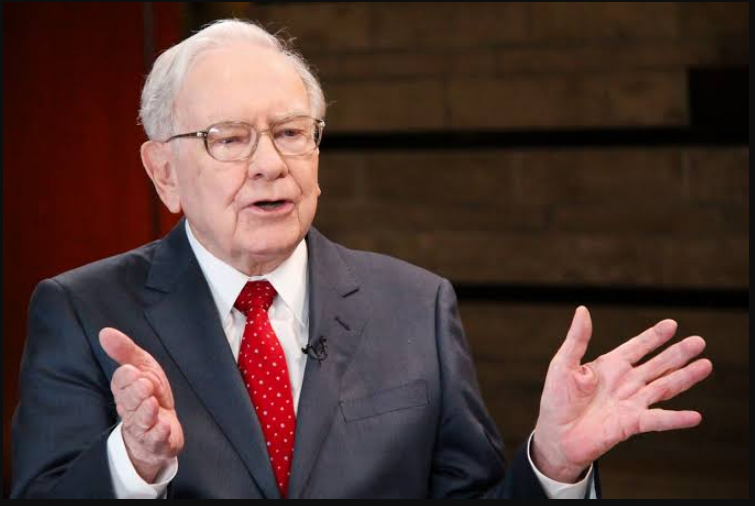
Warren Buffett is one of the most influential investors in modern history. Known as the “Oracle of Omaha,” he spent decades transforming Berkshire Hathaway from a struggling textile company into one of the world’s largest and most closely watched business groups.
His success did not come from following short-term market trends. Instead, Buffett became famous for patience, disciplined decision-making and a willingness to hold strong businesses for many years.
From Omaha to Wall Street
Buffett was born in Omaha, Nebraska, in 1930. He developed an interest in business and numbers at an early age, purchasing his first shares when he was 11 years old.
After studying at the University of Nebraska, he attended Columbia Business School, where he learned from economist and investor Benjamin Graham. Graham introduced Buffett to value investing—the practice of looking for companies trading below their estimated long-term worth.

Buffett later adapted this approach. Rather than focusing exclusively on inexpensive companies, he began searching for high-quality businesses with durable advantages, capable management and reliable earnings.
Building Berkshire Hathaway
Buffett started purchasing shares in Berkshire Hathaway during the 1960s, when it was still a declining textile manufacturer. He eventually took control of the company and redirected its resources into insurance, energy, transportation, manufacturing and consumer businesses.
Insurance became especially important because it provided Berkshire with capital known as “float”—money collected in premiums before claims were paid. Buffett used this capital to purchase businesses and make long-term investments.
Over time, Berkshire acquired companies such as GEICO and BNSF Railway while building major operations in energy, manufacturing and retail. It also became known for significant investments in established public companies.
Buffett’s approach was generally straightforward: understand the business, evaluate its long-term economics, examine the quality of its management and avoid paying an unreasonable price.
The Power of Long-Term Thinking
Buffett has repeatedly warned investors against treating the stock market like a casino. He believes that purchasing shares should be approached as buying part of a real business rather than betting on short-term price movements.
This philosophy requires patience. Buffett has often remained inactive when attractive opportunities were unavailable, preferring to hold cash instead of making a weak investment simply to follow the market.
His strategy also emphasises financial resilience. Berkshire traditionally avoids excessive borrowing and maintains substantial liquidity, allowing it to respond when economic conditions become difficult.
Buffett’s long partnership with the late Charlie Munger also shaped this philosophy. Munger encouraged him to focus more heavily on outstanding companies rather than businesses that were merely inexpensive. Their collaboration helped establish Berkshire’s culture of rational decision-making, decentralised management and long-term ownership.
A Historic Leadership Transition
A major change took place on January 1, 2026, when Greg Abel succeeded Buffett as Berkshire Hathaway’s chief executive officer. Buffett remains chairman of the board and Berkshire’s largest shareholder.
According to Berkshire’s 2026 proxy statement, Abel now holds executive responsibility for the company, while Buffett continues to provide experience and institutional continuity. Berkshire has also stated that Buffett remains active in the office and available for discussions concerning operations, insurance and capital allocation. Berkshire Hathaway’s 2026 proxy statement
The transition represents the beginning of a new era. Abel must preserve Berkshire’s distinctive culture while leading a company that has grown too large to depend on the decisions of a single individual.
Wealth and Philanthropy
Buffett is also recognised for his philanthropic commitments. In 2010, he helped launch the Giving Pledge, an initiative encouraging wealthy individuals to donate most of their fortunes to charitable causes.
He has pledged that more than 99% of his wealth will eventually go to philanthropy. Over the years, he has donated large amounts of Berkshire Hathaway stock to charitable foundations. The Giving Pledge
Despite his wealth, Buffett has maintained a public image associated with simplicity, consistency and life in Omaha. His annual shareholder letters have also become widely read discussions of business, investing, corporate responsibility and human behaviour.
Why Warren Buffett Still Matters
Buffett’s influence extends beyond his financial results. His career demonstrates how patience, independent thinking and emotional discipline can remain valuable even as markets and technologies change.
His methods cannot guarantee investment success, and the future may not resemble the economic environment in which he built Berkshire Hathaway. Nevertheless, the principles behind his career—understanding what you own, avoiding unnecessary risk and thinking in decades rather than days—continue to influence investors and business leaders around the world.
